

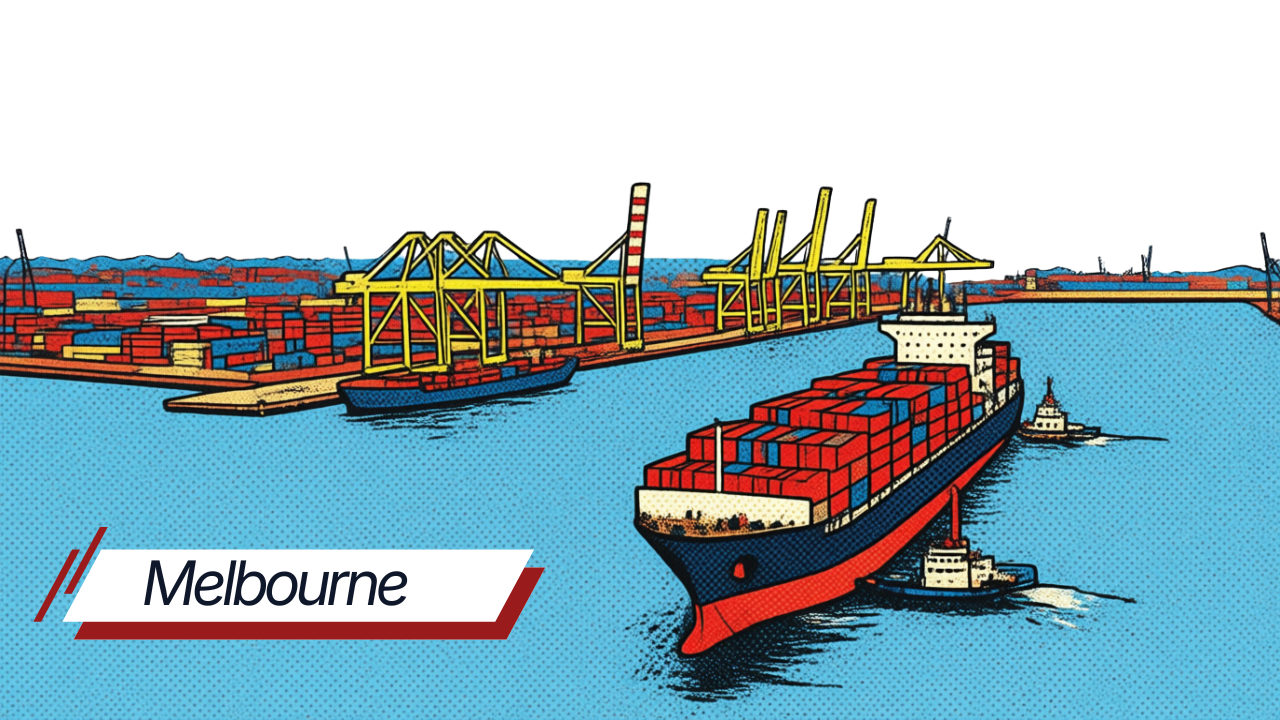
Australia is an island. That simple geographic fact dictates every single line of its trade law. If you are looking to move goods into the Australian market, forget what you know about the US or the EU. The rules here aren't just about taxes. They are about survival.
The Australian Department of Agriculture, Fisheries and Forestry (DAFF) and the Australian Border Force (ABF) operate with a level of clinical precision that catches foreign exporters off guard. Every year, seasoned logistics managers lose millions in demurrage because they underestimated a bug or a missing certificate.
Compliance is not a checkbox. It is a barrier to entry. If you want to scale in Australia, you need to understand that the paperwork is as important as the product.
The Biosecurity Wall: Why DAFF Doesn’t Care About Your Deadline
Most countries protect their industries. Australia protects its life. Because the continent evolved in isolation, its ecosystem is fragile. One invasive pest can wipe out a multi-billion dollar agricultural sector in a single season.
This is why Australia Import Compliance begins with biosecurity.
The Department of Agriculture (DAFF) has the power to seize, treat, or destroy your cargo. They do not negotiate. They do not accept "we forgot." If your wooden pallets aren't ISPM 15 compliant, your entire shipment stops. If there is soil on the underside of a bulldozer, the machine stays at the wharf until it is scrubbed clean at your expense.
The costs of non-compliance are astronomical. Cleaning fees, storage at a bonded warehouse, and re-inspection can easily exceed the value of the goods. You are not just paying for a mistake; you are paying for the risk you introduced to the continent.
The Seasonal War: Brown Marmorated Stink Bug (BMSB)
From September 1st to April 30th, the rules of the game change. This is the Brown Marmorated Stink Bug (BMSB) season. If you are shipping "target high risk" goods from "target risk countries," you are in the crosshairs.
The BMSB is a hitchhiker. It hides in machinery, vehicles, and breakbulk. If it establishes itself in Australia, it would devastate the wine and fruit industries.
Treatment is Mandatory
During this window, you cannot simply ship and hope for the best.
- Offshore Treatment: High-risk goods must be treated before they leave the origin port.
- Approved Providers: You must use a treatment provider registered with DAFF. If your provider is not on the list, the treatment is void.
- Documentation: Your sealing declarations and treatment certificates must be perfect. One typo in a container number can trigger a mandatory re-treatment or export order.
I have seen companies lose entire seasonal contracts because their Italian or US suppliers ignored the BMSB warnings. They treated the bug as a minor nuisance. The Australian government treats it as a biological threat.
Asbestos: The Zero Tolerance Reality
Australia is one of the few nations with an absolute zero tolerance for asbestos. Most countries allow for a 1% or 0.1% "asbestos-free" threshold. Australia defines "zero" as 0%.
If the Australian Border Force (ABF) suspects a gasket, a brake pad, or a piece of insulation contains even a trace of chrysotile, your shipment is dead in the water.
The Risk Categories
The ABF targets specific goods:
- Construction Materials: Tiles, panels, and cement.
- Automotive Parts: Gaskets, clutches, and friction materials.
- Industrial Equipment: Boilers, kilns, and high-heat machinery.
Do not rely on a manufacturer's declaration from China or Southeast Asia. Often, those manufacturers don't realize their raw material supply chain is contaminated. To ensure Australia Import Compliance, you need testing from a NATA-accredited laboratory (or an international equivalent like ILAC).
If the ABF finds asbestos, the goods cannot be "cleaned." They must be exported or destroyed. There is no middle ground. There are no permits for "accidental" importation.
Leveraging ChAFTA: Strategic Tax Mitigation
While the biosecurity rules are harsh, the trade agreements are generous. The China-Australia Free Trade Agreement (ChAFTA) is a powerful tool for those who know how to wield it.
Most consumer and industrial goods coming from China can enter Australia at a 0% duty rate. However, this is not automatic.
The Certificate of Origin (COO)
You need a valid ChAFTA Certificate of Origin. It must be issued by an authorized body, such as CCPIT or the China Customs. If the description on the COO doesn't match the commercial invoice, the 5% duty will be applied.
Many importers leave money on the table. They pay the duty because their paperwork is messy. Over a year of high-volume shipping, that 5% is the difference between a profitable quarter and a loss.
Check your HS codes. Ensure your supplier understands the specific requirements of ChAFTA Article 3. A mistake in the "Origin Conferring Criteria" code (usually 'P' or 'PSR') renders the document useless.
The Math of the Border: Calculating GST and VoTI
In most countries, you pay tax on the price of the goods. In Australia, the GST calculation is more complex. You pay GST on the Value of the Taxable Importation (VoTI).
If you get this calculation wrong, your cash flow forecasts will be off.
The VoTI Formula
To find the VoTI, you add four things:
- Customs Value (CV): The price paid for the goods, converted to AUD at the exchange rate on the day of export.
- Customs Duty: Usually 0% or 5%, depending on the HS code and trade agreements.
- International Transport and Insurance (T&I): The cost to get the goods to Australia.
- WET (Wine Equalization Tax): If applicable.
VoTI = CV + Duty + T&I (+ WET)
The GST is 10% of that total sum.
Note that you are paying tax on the freight cost. If shipping rates spike, your GST liability spikes too. This is a "tax on a tax" scenario that catches many CFOs by surprise. You must ensure your freight forwarder provides accurate T&I figures to your customs broker. Estimated figures lead to amended entries and potential penalties.
Why You Need a Licensed Customs Broker
You can try to do this yourself. You will fail.
The Australian Integrated Cargo System (ICS) is an archaic, complex software environment. Licensed Customs Brokers in Australia are personally liable for the accuracy of their lodgments. They are your shield against the ABF and DAFF.
A good broker doesn't just "input data." They:
- Audit your HS codes: Are you paying 5% when you should be paying 0%?
- Manage DAFF profiles: They know which commodities will trigger an "Order to Inspect."
- Manage Concessions: They can apply for Tariff Concession Orders (TCOs) if no local industry produces your goods. This can drop your duty from 5% to 0% even without a Free Trade Agreement.
The Professional Reality
Australia is a premium market. It has high purchasing power and a stable economy. But the gatekeepers are the toughest in the world.
If you treat Australia Import Compliance as an afterthought, the system will break you. If you treat it as a strategic pillar—investing in the right lab tests, the right treatment providers, and the right brokers—you gain a competitive moat.
The rules aren't there to stop trade. They are there to ensure that trade doesn't destroy the country. Understand the "why" behind the DAFF and ABF regulations. Respect the zero-tolerance policy on asbestos. Do the math on VoTI.
In the Australian supply chain, the fast move is the compliant move. Anything else is just expensive noise.

Sergiu Sebastian Samson
Supply Chain & Compliance Expert at SupplierLinkUp. Specializing in mitigating cross-border risk, Sergiu helps businesses build robust import strategies that withstand CBP audits, UFLPA requirements, and complex US trade laws.
Consult with Sergiu →