

For garment buyers and brand owners, sourcing fabric is never as simple as feeling the texture and checking the color. Behind every successful garment lies a complex "Fabric DNA." At SupplierLinkup, we know that from the surface composition ratio to the microscopic yarn structure, and down to the tracking tags on the factory floor, every single detail dictates your garment's quality, cost, and lifespan. Here is an inside look at how we decode this Fabric DNA and analyze specs beyond the basic swatch.
1. Basic Information: Reading the Fabric's "Resume"
The first step in our fabric sourcing journey is a thorough review of the supplier's swatch header. We treat this as the fabric's resume—it contains the most fundamental DNA information needed to evaluate its potential for your production line.
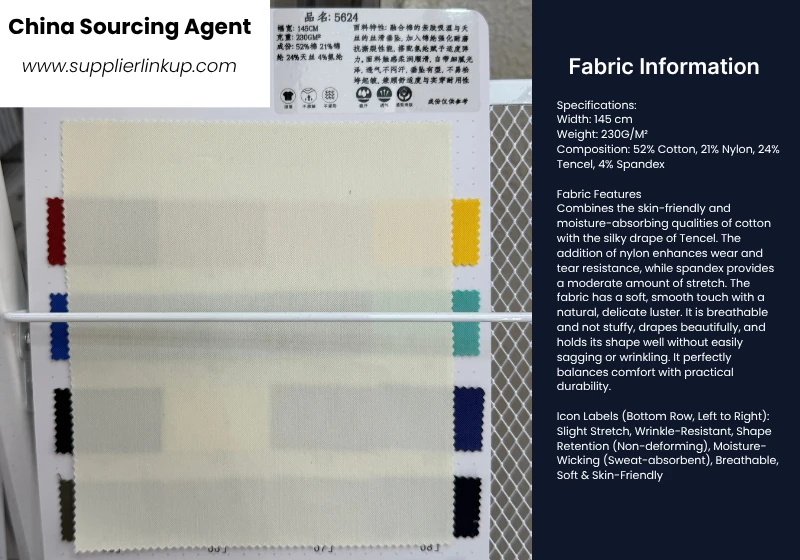
A reliable fabric swatch card clearly details the core genetic makeup of the material. When SupplierLinkup analyzes these cards, we look for:
- Multi-Component Blends: A complex blend might consist of 52% Cotton, 21% Nylon, 24% Tencel, and 4% Spandex, weighing 230G/M² with a width of 145 cm. We verify these specs against your tech pack to ensure a perfect match for your design requirements.
- Performance Tags: These cards highlight essential fabric features, indicating whether a material possesses slight stretch, is wrinkle-resistant, retains its shape, or offers moisture-wicking and breathable properties.
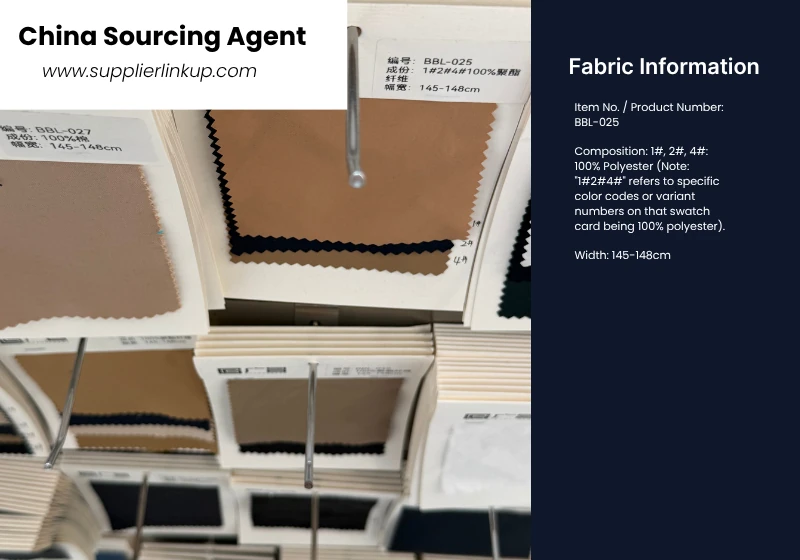
- Standard Synthetics: Conversely, other materials might feature a simpler, standardized composition, such as 100% Polyester for specific color variants with a standard width of 145-148cm.
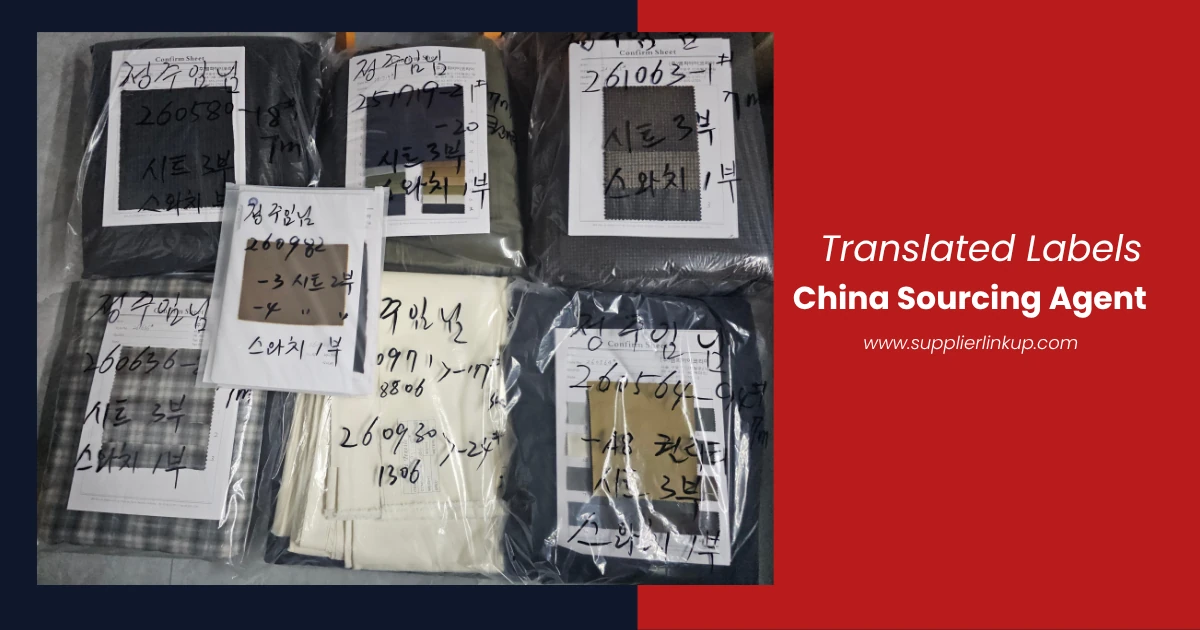
This basic DNA information is so critical that it must be meticulously documented and communicated across international supply chains to avoid costly production errors. To prevent miscommunication, we ensure bulk rolls and sample packages are explicitly labeled with translated text, such as handwritten Korean notes detailing quantities and item numbers for our overseas clients.
2. Post-Processing: The Impact of Washing Effects
SupplierLinkup always reminds clients that a fabric's fundamental DNA can mutate significantly based on the finishing processes applied to it.
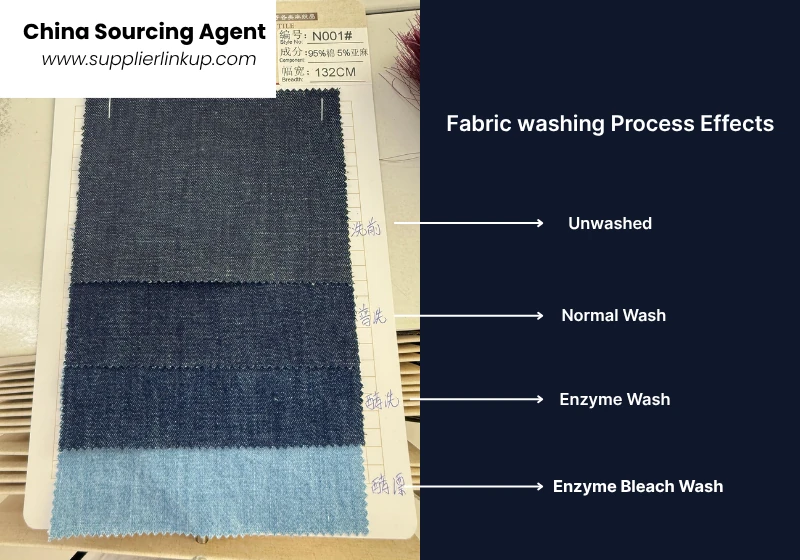
A fabric's baseline properties and appearance will alter dramatically based on post-processing treatments. For example, a single 132cm wide fabric composed of 95% Cotton and 5% Linen looks drastically different across various washing stages:
- Unwashed: The fabric retains its original, dark, raw appearance.
- Normal Wash: A standard wash softens the hue and texture slightly.
- Enzyme Wash: The enzymatic process adds further distress, lightening the color.
- Enzyme Bleach Wash: This intensive wash completely transforms the fabric into a heavily distressed, light blue shade.
3. Under the Magnifier: Inspecting the "Micro-Skeleton"
Data on a swatch card gives you the theory, but the physical structure of a fabric provides the undeniable truth. This is why SupplierLinkup's sourcing experts rely on close-up physical inspections.
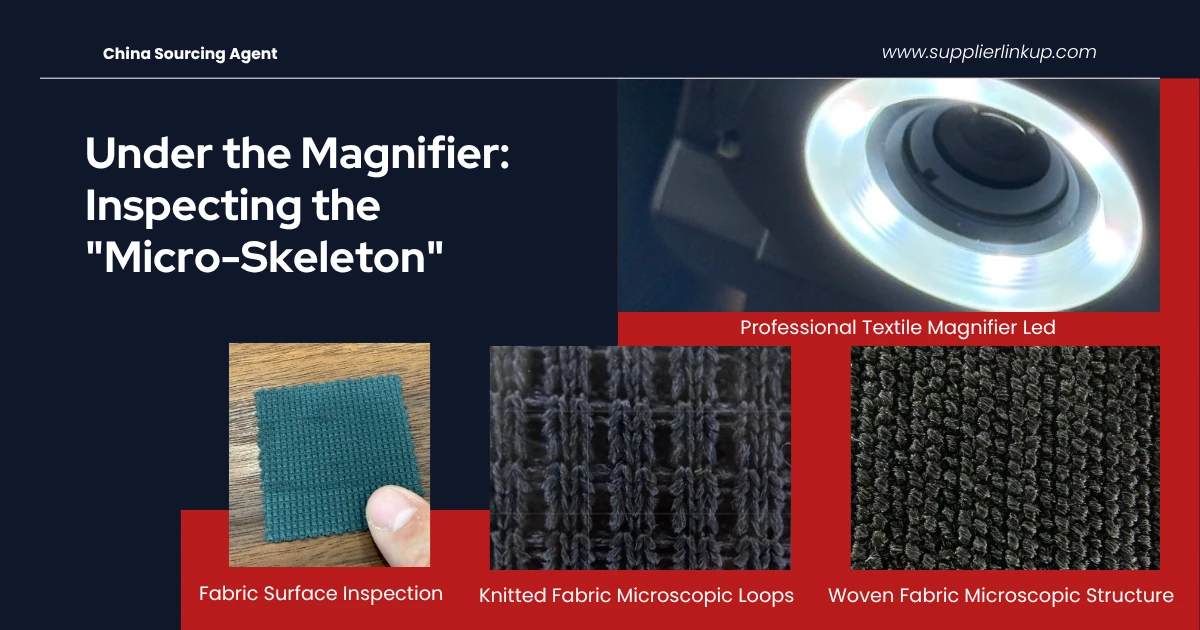
To truly verify quality, we conduct physical surface inspections using specialized tools. Illuminating the fabric with a professional LED textile magnifier exposes the micro-skeleton of the material, allowing us to identify the exact construction method.
- Knitted Construction: Under high magnification, knitted fabrics reveal distinct microscopic loops that interlock with one another.
- Woven Construction: Conversely, woven fabrics display a rigid, grid-like microscopic structure of tightly intersecting horizontal and vertical threads.
4. Lab Data: Reverse Engineering the "Source Code"
What happens when you find the perfect market sample, but you need to replicate it for better pricing or custom manufacturing? This requires the most hardcore step in fabric sourcing: reverse engineering.
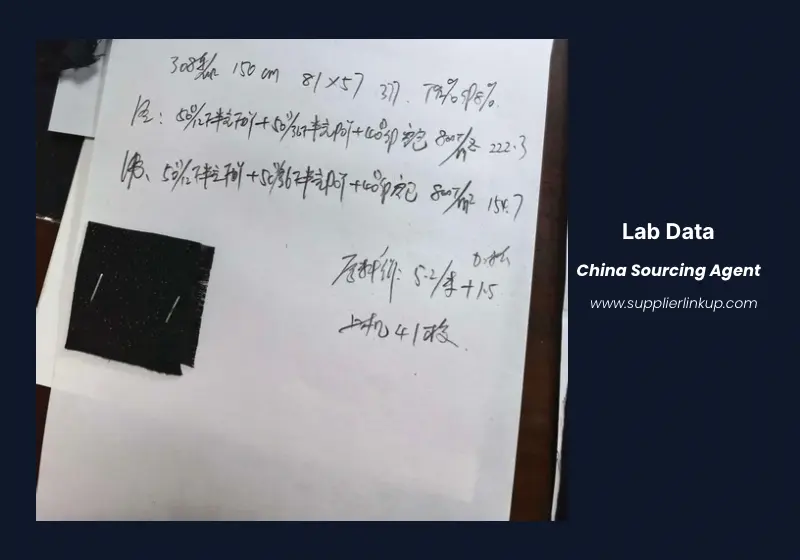
To an amateur, this is just a small piece of cloth next to messy handwriting. But to our professional sourcing agents, this fabric has been successfully dismantled into a precise string of "source code":
- Actual Measured Weight & Width: Verified at 308g/m and 150cm.
- Exact Density: 81 x 57 threads per square inch.
- Yarn Count & Twist: The handwritten notes detail the exact specifications for both warp and weft yarns, including notations like "800T/m", referring to the yarn twist (Turns per meter). The twist level directly dictates the fabric's tensile strength and whether the hand-feel is soft or crisp.
Armed with this "truth data," we are no longer at the mercy of a single wholesale vendor. We can take these specs to any weaving mill and request custom sampling. Mastering this data allows us to control quality at the source and optimize manufacturing costs for your brand.
5. The Prototype Trial: Tracking the DNA in Production
Decoding the fabric DNA doesn't stop once you've purchased the yardage. Our final test is ensuring that the specific fabric we meticulously sourced actually makes it into the correct garment prototype without any mix-ups on the factory floor.
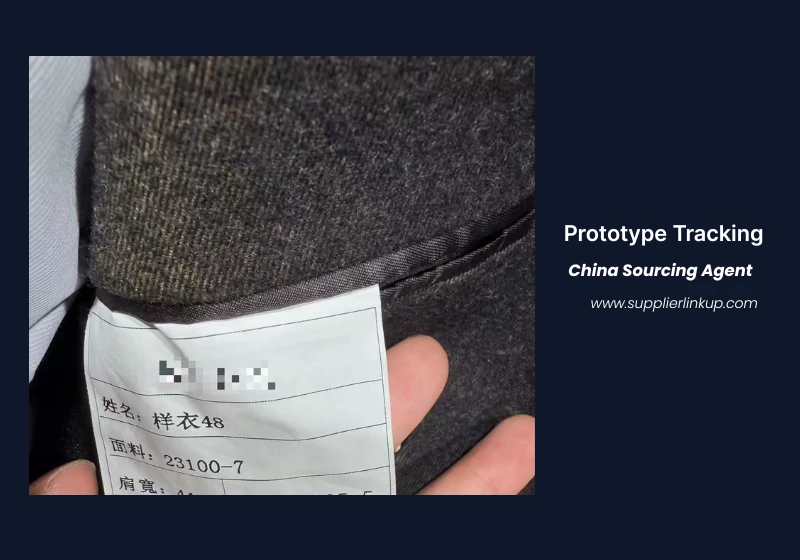
Once the correct fabric is sourced, it moves to the prototyping phase, requiring strict prototype tracking to guarantee accuracy. We ensure factories sew dedicated paper tracking tags directly into the seams of the garments. For example, a tracking tag will explicitly link a specific prototype, such as "Sample 48", to its unique fabric code, "23100-7". When a brand is developing dozens of styles simultaneously, this physical tracking system guarantees that the high-quality fabric we verified under the magnifier isn't accidentally swapped out during bulk production.
Supplier Linkup: Your Trusted Sourcing Partner
If you want to source products from Supplier Linkup, we act as a trustworthy go-between, making sure both sellers and buyers benefit and trust each other in their agreements.