

You might be wondering how to source products from China and find a reliable agent to handle the heavy lifting. The internet is flooded with middlemen claiming they can do it all. They can't. Here is my most practical, no-nonsense recommendation based on years of operating on the ground in Changsha.
Where to Look for a Reliable Sourcing Agent in China
Word of Mouth
This is one of the best options available. Word of mouth has always been an effective method in business—whether for finding contacts or conducting operations. If you don't already know anyone in the industry, seek out other importers or join vetted B2B business communities. The Hive Index is a great place to start finding enterprise networks.
Trade Fairs in China
If you are currently in China, or planning to travel here, I highly recommend attending the Canton Fair in Guangzhou. It is the most renowned trade fair of its kind. This gives you the opportunity to meet agents face-to-face, assess their professionalism, evaluate their communication skills, and filter out the amateurs from the actual supply chain managers.
Vetting Platforms
I recommend two specialized platforms for vetting companies in China. One is LinkedIn, though it is not always highly reliable when it comes to Chinese entities. The second platform, which is 99% secure and used heavily locally, is QCC (Qichacha).
How to Rule Out an Inexperienced Sourcing Agent
Before making a purchase or requesting product sourcing services, never skip the interview. Schedule a meeting via Google Meet or a direct call at +8613627339209 and apply these four ruthless filters.
Filter 1: Legal Entity
First, you must verify that the company is formally registered in China by requesting to see its business license as part of your due diligence process. On this business license, you need to verify the Unified Social Credit Code (Registration Number).
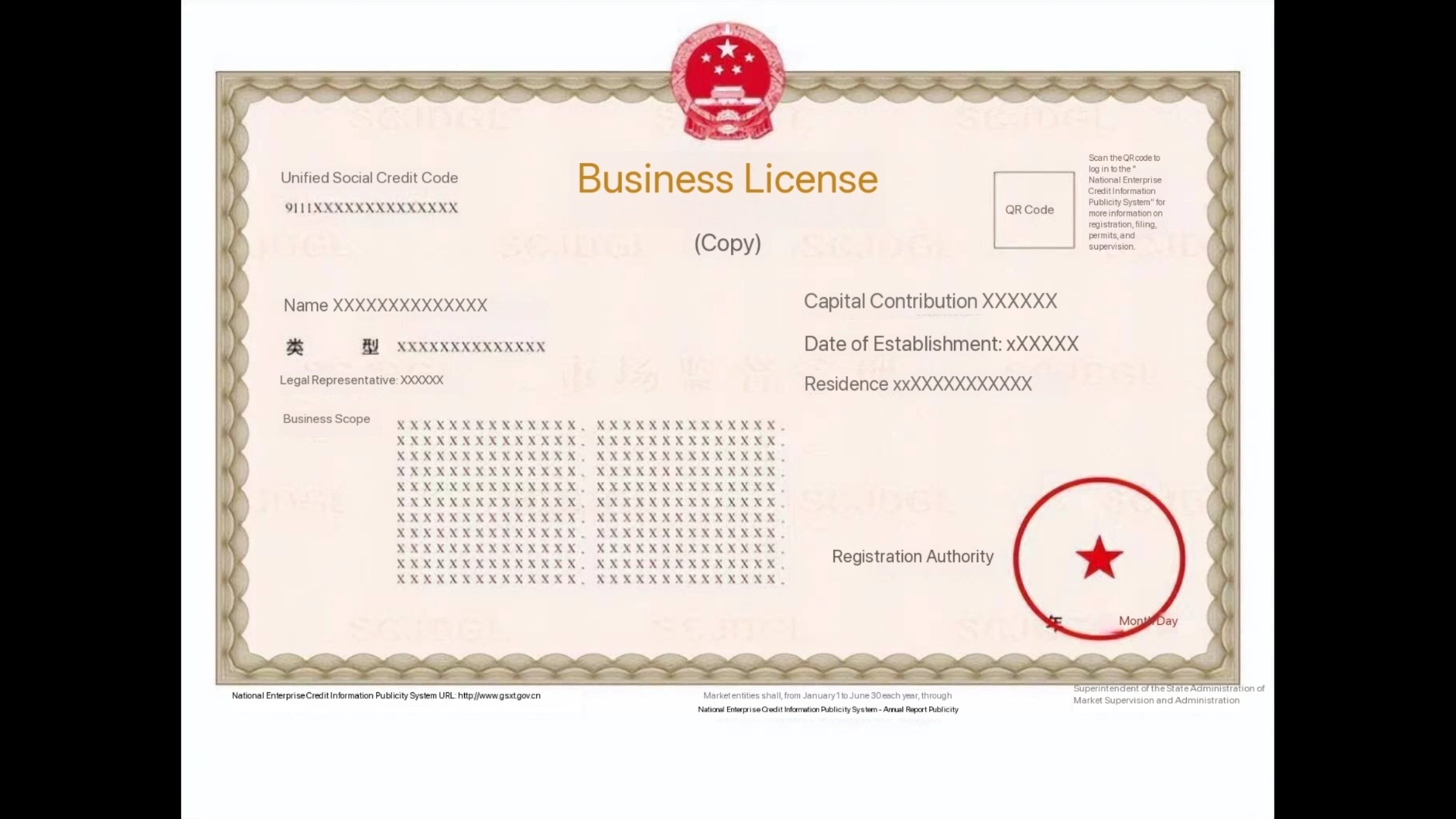
The license should also include an "activity code" or business scope, which indicates the specific business activities the company is authorized to perform (this helps you distinguish a trading company vs a factory). Note that on a Chinese business license, the activity is typically listed by name rather than by a numerical code. Ensure they show you the address of their physical offices—this must match the license. You can also use this data on QCC to check employee headcount to gauge their true scale, and verify if they are involved in any credibility-destroying lawsuits.
Filter 2: Pricing Transparency
A reliable sourcing agent will tell you exactly how they earn their money. Whether they charge a percentage of the order value, a fixed fee per project, or a specific cost for product inspection, the structure must be crystal clear before you start.
Filter 3: Technical Specialization
Do not place your trust in an agent who claims to be an expert in every single industry. As I've written before, trust is the best supply chain, and that trust is built through pure technical authority, not subjective testimonials. Trust agencies that can demonstrate deep technical knowledge and provide rigorous quality control protocols within your particular product category. Reputable partners will conduct thorough research regarding technical specifications and will tell you point-blank if they are capable of performing a comprehensive quality check. This is crucial because manufacturers in China will often quietly lower product quality to offer more competitive pricing against their rivals.
Filter 4: Documentation
Ask them for a real-world example of a factory audit report. If their report is not comprehensive, not technical, and does not include high-resolution photos or videos of the machinery and defects, don't think twice—rule them out immediately.
The Final Test
Never start a large-scale production run with a new agent. Put them to the test with a small-scale order first.
"Ask them to audit a supplier you are already working with—since you know the pricing and are familiar with the baseline—or have them audit a brand-new supplier. Have them source a factory and provide you with a sample product before committing to volume."
This allows you to evaluate their response speed, their technical grasp of your requirements, and their ability to resolve issues when things don't go right the first time (because in mass production, entropy guarantees something won't).
Conclusion
To recap: start by finding candidates through word of mouth or trade fairs. Vet them relentlessly by checking their business license, ensuring pricing transparency, demanding technical authority over flashy testimonials, and reviewing their documentation. Finally, test them with a sample run. If they survive that gauntlet, you have secured a reliable sourcing agent.
If this guide helped you cut through the noise, share it with other importers who are tired of getting burned.