

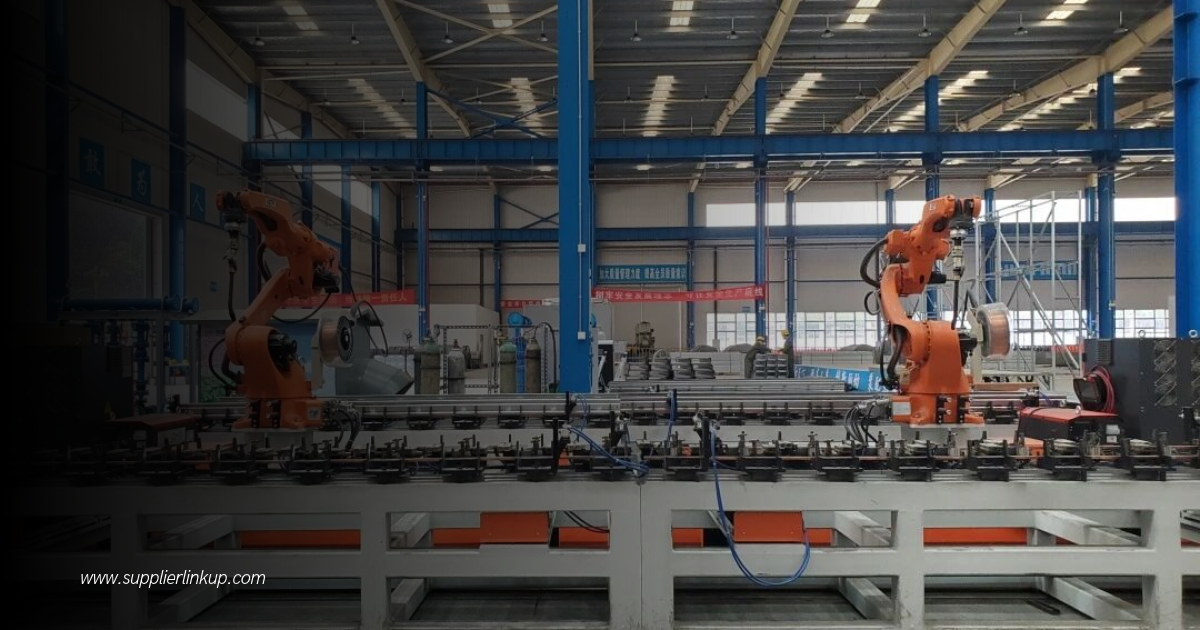
If you buy industrial machinery from China, you already know the appeal. Capacity is deep, and the supplier base covers CNC equipment, packaging lines, plastics machinery and construction plant. You also know the uncomfortable part: a quotation is not a machine, and a low ex-works price is not the cost of getting working equipment onto your floor.
This guide walks through the job in the order we would do it with you—from the specification to factory checks, contracts, testing, shipping and after-sales. It is for importers, distributors and contractors in the EU, the United States and Latin America who need the machine to perform, not just to look convincing in a PDF.
Why China—and why Changsha matters
If you are buying construction or heavy equipment, start with Changsha in Hunan province. It is the headquarters city for several of the sector’s best-known manufacturers, including SANY, Zoomlion and Sunward, whose industrial park is in Xingsha.
China Daily reported in May 2023 that Changsha’s construction-machinery cluster accounted for a third of national output value in 2022, that the city’s income in the sector had ranked first in China for 12 consecutive years, and that Changsha is one of the world’s three largest construction-machinery clusters, alongside Illinois in the United States and Tokyo in Japan. In 2026, the Hunan provincial government reported that five Changsha-based companies—SANY, Zoomlion, CRCC (CRCHI), Sunward and Sinoboom—were again shortlisted in major global rankings.
A famous neighbour is not a substitute for walking the factory in front of you. And Changsha is not the whole map. Many packaging lines, injection-moulding machines and a good deal of CNC equipment are built in Guangdong, Zhejiang and Jiangsu. Although our head office sits in Changsha’s construction cluster, the team works those other hubs as well. Madalina Samson has run sourcing operations in Guangzhou since 2019, and our quality work is backed by a national network of 30+ inspectors, so a buyer looking for a bottling line or a plastics machine is not being sent to the wrong province. For more on the cluster, see Why Changsha is the World's Capital of Construction Machinery.
1. Write a specification factories can actually quote
Vague requests such as “I need a packaging machine” invite quotes that cannot be compared. Before you contact China machinery suppliers, put every bidder on the same page: the job the machine must perform; required output and tolerances; the exact scope of tooling, controls and safety systems; and site constraints such as footprint, access and utilities. Chinese equipment is often built for 380V/50Hz three-phase power—confirm that this matches your country, or budget for conversion, before you fall in love with a price.
Also specify acceptance tests, manuals in English (and Spanish if you need them), drawings, training, a spare-parts list, warranty, delivery date, named delivery point, and the Incoterm you want quoted. Ask each supplier to list deviations in writing. A lower price that silently drops a PLC brand or a week of commissioning is not a lower price. It is a different machine.
2. Shortlist real manufacturers, not listings
Build a shortlist of three to five candidates rather than committing to the first exporter who replies. Are you dealing with a manufacturer, or with a trading company reselling someone else’s equipment? Check legal identity (registered name, Unified Social Credit Code, and active status on official Chinese records); business scope; a live video walkthrough of the production floor; references from international buyers of a similar model; and whether the company can issue proper export documents—or whether another entity will appear on the invoice. If a supplier cannot show the workshop or name the entity you would pay, keep them off the list. See also trading companies versus factories and trading companies versus sourcing agents.
3. Verify the factory on site
A factory audit assesses the supplier. A later inspection assesses your machine. Mix the two up and you can end up with a reassuring audit report—and the wrong configuration on the truck. A useful on-site audit answers four questions:
- Identity. Is this a real company at the address it claims, and is that the entity on the contract and the payment?
- Capability. Does it have the plant, tooling and engineers to build your equipment, or will most of the work be subcontracted without your knowledge?
- Control. Are incoming inspection, in-process checks and final testing actually in use?
- Systems. ISO 9001 can signal a documented quality system, but it is not a product-safety certificate, and it is not proof that your machine will be built correctly.
Do this before you commit a large deposit, not after.
From the floor. When we handle this stage, we screen the long list, audit the top three factories on site and send you a written report before you place a large order. That is usually the moment a remote buyer gets real leverage.
4. Check CE, ISO, and destination requirements
A machine that is legal to export from China is not automatically legal to place on your market. Put destination requirements in the RFQ and the contract, then check the documents against the exact model you are buying. A generic certificate that does not match the nameplate or the electrical design is a warning sign, not a green light.
- European Union. CE marking and a declaration of conformity are central for many categories of machinery. Ask whether the file applies to the precise model and configuration you are purchasing, who issued it, and which rules it claims to meet. From 20 January 2027, the EU Machinery Regulation (EU) 2023/1230 will apply; until then, confirm with your compliance advisor which rules govern the shipment.
- United States. Electrical and product requirements may include standards such as UL or FCC, depending on the equipment. Complete this with a qualified advisor, not as a one-line stamp on a quotation.
- Latin America. Destinations can add import licences and local certification—for example, INMETRO in Brazil. Rules differ by country and machine type, so work through them with your customs broker before production is too far along.
ISO 9001 speaks to the factory’s quality system. CE and destination marks speak to market access. Neither replaces a test run of the unit you are actually buying.
5. Lock the contract, payments, and Incoterms
Machinery deals most often fail after the deposit—on delivery, installation and after-sales. Put those items in an enforceable contract under Chinese law, in Chinese and English (and Spanish if needed), and make sure the legal entity on the contract is the one you will pay. Attach the specification and define payment milestones, lead time, packing, installation, warranty, spare parts, OEM tooling ownership, and the Incoterm. Do not pay the full balance against photos.
On payments, there is a market pattern, even if every deal is negotiable. For standard machines, many Chinese suppliers work on a 30% deposit and 70% balance before shipment. For custom machinery or a larger line, a 30/40/30 split is also common: 30% to start, 40% after production is complete and a factory acceptance test has been approved, and 30% before shipment. That is typical practice, not a rule, and only as safe as the conditions you attach to each instalment. Later payments should wait for a satisfactory FAT and, for most high-value shipments, a pre-shipment inspection.
Incoterms change both your landed cost and your exposure:
| Term | Seller typically | Risk usually transfers | Watch-outs |
|---|---|---|---|
| EXW | Makes the machine available at the factory | When you collect in China | You handle export formalities and pickup |
| FOB | Delivers on board at the named Chinese port | On board at origin | Confirm the port and who pays inland trucking |
| CIF | Adds freight and insurance to a named destination port | Still on board at origin, not destination | Does not include import clearance or duties |
| DDP | Delivers to your named place, including import formalities | At destination, once delivered | Only if the quote is truly complete—see below |
DDP can be convenient for a first shipment, but treat a “DDP” offer on industrial machinery with care. Some Chinese suppliers quote DDP while under-declaring the customs value, which can mean fines, delays or a machine you cannot legally land. Others arrange delivery so that you are not the Importer of Record, and you may be unable to reclaim import VAT or control the declaration in your own name. Before you accept DDP, ask who the importer will be, how the customs value will be declared, and whether the invoice will support a proper import in your country. If those answers are vague, a well-specified FOB or CIF term is often cleaner. See Incoterms in China and FOB versus EXW versus DDP.
Keep the three main checks distinct:
| Check | What it answers | When | Who usually does it |
|---|---|---|---|
| Factory audit | Is this a real, capable supplier? | Before a large deposit | Your team, a local agent or an auditor |
| FAT | Does this machine meet the specification? | When the build is complete, before packing | You, your engineer, or a witnessed test |
| PSI | Is the accepted machine the one being packed, and packed properly? | After FAT, before the balance and shipment | An independent inspector or your own QC |
6. Run a factory acceptance test and inspect before shipment
Do not release the final balance until the machine has been shown to work. Write the FAT into the contract, with agreed materials, measurements, duration and pass/fail criteria, and have someone competent in the equipment witness it. A serious FAT is not a staged video. It should include a live run—ideally on your actual raw material, or an agreed equivalent—against the output targets in the specification; a check that motors, PLCs and other key components match the contracted brands; and a written report plus video you can keep if a dispute arises later.
A pre-shipment inspection then confirms that the accepted machine is the one being packed: configuration, workmanship, export crating and rust protection. Independent firms such as SGS, Intertek and TÜV SÜD are widely used for this work. Get a written quote for your machine and factory location: a standard one-day PSI and a multi-day machinery FAT are not the same job.
From the floor. On machinery projects we arrange on-site FAT before the equipment is crated, and you receive video of the machine running together with the agreed documentation. Independent inspection partners can be brought in for the pre-shipment check when you want a third-party report.
7. Plan shipping for heavy machinery—not a standard carton
Heavy equipment is not a standard container booking. Dimensions, lifting points and whether the load is out of gauge will decide whether you need a standard container, an open-top, a flat rack or breakbulk. Before packing starts, confirm the correct HS code, export packing (including rust protection, locked moving parts, and IPPC-marked wood where solid wood is used), the handling limits of the ports and of your site, and a complete document pack. These details are covered in How to Import Heavy Equipment from China: Shipping, Customs, and Tariffs Explained. Use that guide for routing and clearance; use this one to make sure you have bought the right machine first.
8. Secure spare parts, installation, and after-sales before you ship
A machine without a spare-parts plan is a project delay waiting to happen. Wear parts, seals, belts, sensors and proprietary electrical components should be priced and, where lead times are long, shipped with the machine. Ask how future parts will be ordered, and whether software access is included. Installation and training belong in the contract. After delivery you still need a warranty period, a clear list of exclusions, and a way to escalate claims in Chinese if the factory goes quiet.
Common pitfalls when you buy machinery from China
- Choosing on unit price alone. Compare total landed cost: inspection, packing, freight, insurance, duties, installation and first spares.
- Paying a trader who claims to be the factory. If the legal entity, workshop and bank account do not line up, your leverage after a defect is weak.
- Accepting generic certificates. CE, ISO or test reports must relate to the model you are buying.
- Releasing the balance too early. Photos are not a FAT. Inspect before the final payment, not after the vessel sails.
- Ignoring voltage, software and site access. A machine that cannot be powered, programmed or unloaded is not a bargain.
- Leaving after-sales informal. If spare parts, warranty and commissioning are not in the contract, they are optional for the seller.
- Using a Western-only contract. For deposits and intellectual property, you need an agreement that can actually be enforced in China.
- Accepting a vague DDP quote. If you cannot see who the Importer of Record is, or how the customs value will be declared, do not treat “door-to-door” as risk-free.
How a Changsha-based sourcing agent runs the process
If you can verify factories, sit through the FAT and manage Chinese-language contracts yourself, you may not need an agent. Plenty of buyers in the EU, the US and Latin America simply cannot be on site at the moments that matter. In that case, a sourcing agent should act as your office in China—not as another trader standing between you and the factory.
That is the work we do at SupplierLinkUp. We review your specification, screen suppliers and audit the top three on site, follow the build with FAT and pre-shipment inspections, and coordinate packing, freight and customs paperwork. You pay the factory directly, or through a trusted escrow arrangement. Our fee is agreed with you in advance; we do not take hidden commissions from the factory. Contracts are signed in China so your deposit and intellectual property have a realistic path to enforcement.
Sebastian Samson, Head of Sourcing, has eight years of negotiation and sourcing experience, including three years on the ground in China. Madalina Samson, Supply Chain and Sourcing Manager, has led sourcing operations in Guangzhou since 2019. Quality is led by Tao Sheng, who coordinates the inspector network mentioned earlier. You work with one dedicated manager, in English or in Spanish.
Supplier Linkup: Your Trusted Sourcing Partner
If you want to source products from Supplier Linkup, we act as a trustworthy go-between, making sure both sellers and buyers benefit and trust each other in their agreements.