
In this guide:
Interview with Sergiu Sebastian Samson-Founder of SupplierLinup
When it comes to large projects in the sourcing industry, a recurring topic is the need for consistent quality to ensure deliverables remain competitive in the market. At the same time, large-scale factories must leverage lean production to optimize costs and reduce lead times. Drawing on our hands-on sourcing experience with numerous factories, we sat down for an interview with Sergiu Sebastian, the founder of SupplierLinkup.
Question: What do you think is the most important issue in the sourcing process? Price or Quality?
Answer:
"Since our clients' own customers are always shopping around, pricing is naturally an unavoidable topic in any competitive market. But competing on price alone is not where we step in. Our early customers were wholesale dealers, not established brands. Take electric bikes for example. If a dealer just wanted to buy a cheap, off-the-shelf product instead of properly sourcing it, they could easily check sales and reviews on Alibaba or Made-in-China. They can run price comparison tools, which is incredibly easy right now with the rise of AI. But they choose to work with us for one specific reason. They seek us out precisely because there is a massive lack of trust in product quality and reliable processes when dealing directly with Chinese suppliers."
Question: Talking about processes, what quality control processes do you find work well with the Chinese supply chain?
Answer:
"First, we always require the factory to send samples before starting mass production. We keep one reality in mind: a supplier will always send their absolute best work as the example. Our main goal is to make sure the final production remains consistent with that golden sample. Once the customer signs off on it, we know exactly what quality level we need to enforce.
From there, we implement three strict levels of quality control for small quantity trials. For this stage, the first level covers basic appearance and unit counts, like verifying the exact number of garments in an apparel order. The second level focuses on physical dimensions. For instance, the internal components of a coffee machine must have the exact right volume to fit and function properly. The third level is for engineering or electrical parts. For these components, we never just trust a printed label on the box. We mandate actual third party test reports directly from an independent laboratory.
But the work does not stop there. If the client comes back with additional requirements or feedback, we must make sure those requested improvements are fully absorbed by the factory’s technical, production, and after-sales teams. We need absolute certainty that any issues the customer raises are properly handled and implemented in all future production runs."
Question: How do you compare quality from different factories?
Answer:
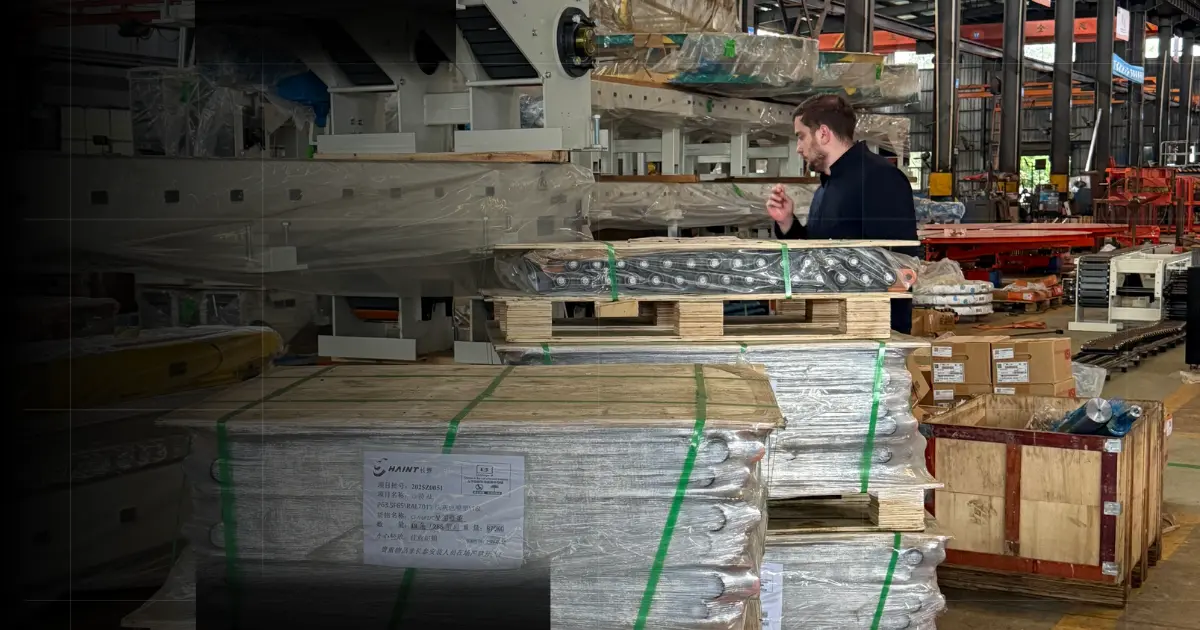
"If you have five factories quoting the exact same price for a computer, we consider that the absolute floor. If someone drops their price below that point, you can be sure the quality is going to take a hit. And I am talking about factories operating under the exact same conditions. I do not mean comparing a factory with its own production line to a middleman who is just outsourcing to partners. In our experience, factories run very different setups under one roof. Some use high-precision machinery to guarantee top quality, while others run lines that put out inferior products. That is exactly why we insist on going on-site. We need to see how their production actually runs and look at the exact brands of equipment they are using. At the end of the day, the machine itself sets the absolute limit on the quality you can expect."
Question: As a foreigner in the sourcing industry, what do you find particularly challenging?
Answer:
"If I approach a factory by myself, they will automatically quote me a higher price. Sometimes they will drop the price just to keep me happy, but they will secretly cut corners on quality to make up the difference. The biggest advantage I have now is that our company is officially registered in China, and I work alongside local Chinese partners. When we negotiate, the factories often assume my partner is simply a sourcing agent and that I am the foreign buyer. Because they think they are just talking to another local, they offer the true domestic price to my partner and end up revealing their real bottom line to my Chinese team."
Question: Out of quality, delivery, and cost, which factor do you find is the hardest to optimize when you first enter a new product category with Chinese suppliers?
Answer:
"Delivery and cost are deeply connected, and logistics play a massive role in both. To manage this, we exclusively choose established factories with long track records. Experienced manufacturers truly understand their own capacity. They give us precise lead times instead of promising impossibly fast production just to win an order. Beyond the factory floor, we have strong partnerships across sea, rail, and air freight. Our factories trust us because we manage this entire logistics chain. Moving freight is exactly like catching a passenger train. The cargo ships operate on very strict, predetermined schedules. Once you know exactly when the boat leaves the port, you can align your entire factory production schedule to hit that exact window. That level of planning is how you truly optimize both the price and the delivery time."
Question: Do you think Chinese manufacturing is still competitive in the world market?
Answer:
"To be honest, no, but the real issue is how the system is set up. Most of the time, trading companies are the ones actually selling to the rest of the world. These middlemen invest heavily in advertising, and to keep their prices aggressively competitive, they consistently source lower-quality products. That dynamic is exactly why Chinese goods have developed a bad reputation for quality over the years. The sad truth is that the actual factories are completely disconnected from the global market. The vast majority of them have no idea how to market themselves internationally, so they just sit back and wait for the trading companies to feed them orders."
Question: Do you think you can change the market logic a little bit?
Answer:
"Honestly, it will take thousands of companies like ours to truly change the entire situation. We need companies with the vision to look beyond short-term benefits and commit to sustainable practices. But we are certainly doing our part. Our team is currently developing a new marketplace that works exclusively and directly with real factories.
Let me give you an example of why this is so critical. We previously engaged with a supplier that looked exactly like a legitimate factory. They had a flawless portfolio of documents, including raw material logs, quality control footage, and delivery videos. In reality, they were just middlemen managing several different factories. It is easy for them to consolidate paperwork from different places, but the truth comes out when you apply pressure.
We requested a sudden, unannounced video call. Instead of bringing their top management on camera, they put a random factory worker on the screen who could not answer any of our questions. Shortly after our call ended, the trading company immediately fired that worker. Naturally, we refused to move forward with any plans to visit that facility.
My philosophy is simple. If you are a trading company, just be honest with me. I can easily see the value in your expertise and resources. But under no circumstances should you package yourself as a factory. That experience proves exactly why having an onsite team is so important. You need people on the ground to look past the smoke and mirrors and filter out unprofessional middlemen at every single stage of the audit."
Conclusion
Interviewer: Thank you so much for your time and for sharing such valuable insights into the market and the strict quality control processes you highlighted today.
Conclusion: As our conversation with the founder of SupplierLinkup comes to a close, it is evident that successful global sourcing is entirely about building trust and maintaining total visibility over production. From matching factory output to exact freight schedules, to conducting surprise video audits that expose hidden trading companies, Sebastian and his team demonstrate what real supply chain management looks like. For businesses looking to scale their purchasing without compromising on quality, having a trusted, transparent partner on the ground is no longer just an advantage. It is an absolute necessity.
Supplier Linkup: Your Trusted Sourcing Partner
If you want to source products from Supplier Linkup, we act as a trustworthy go-between, making sure both sellers and buyers benefit and trust each other in their agreements.

Fan Tan
Brand Management Manager
Brand Management Manager of SupplierLinkup Team.
Consult with Fan →