

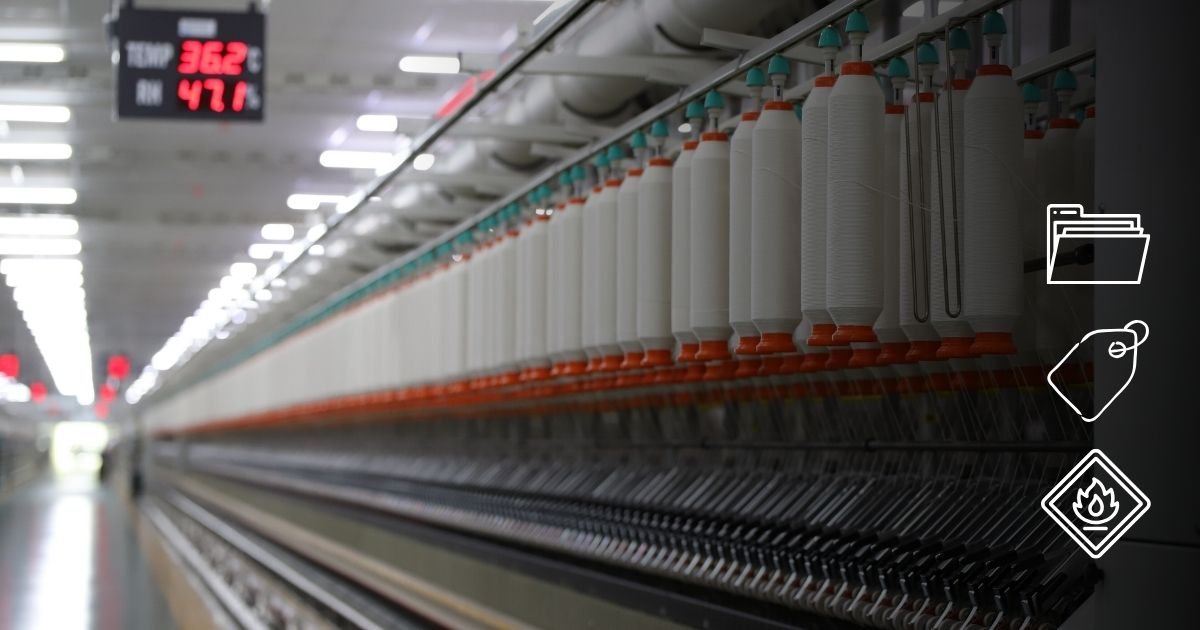
For textile imports entering the United States, compliance is the absolute prerequisite for customs clearance and retail listing. As your China sourcing agent, we manage factory sourcing, sample control, testing execution, label auditing, and the collection of authentic manufacturing data. However, under U.S. Consumer Product Safety Commission (CPSC) regulations, the Importer of Record (IOR) bears the ultimate legal responsibility for issuing compliance certificates and completing eFiling.
Adult apparel, children's wear, and home textiles are all bound by strict federal mandates. This guide breaks down the core regulatory framework, the details of the 16 CFR Part 1610 flammability standard, the critical 2026 policy changes, and the exact division of responsibilities to minimize your import risks.
1. Core Regulatory Framework
- Textile Fiber Products Identification Act (16 CFR Part 303, FTC): All textile apparel must feature a securely attached, durable label clearly stating the generic fiber names and their percentage by weight. We audit label templates, and the factory executes production.
- Wool Products Labeling Act (16 CFR Part 300, FTC): Mandatory for wool and cashmere products, strictly regulating fiber content and country of origin information.
- Care Labeling Rule (16 CFR Part 423, FTC): Mandatory for apparel. Garments must have a permanent care label providing accurate instructions for washing, drying, ironing, bleaching, or dry-cleaning. Missing or incorrect care instructions can result in FTC penalties.
- Flammable Fabrics Act (FFA, CPSC): The core standard is 16 CFR Part 1610, designed to keep dangerously flammable textiles out of the market. It establishes a standardized 45-degree angle flammability test and divides fabrics into three classes. Exemptions: Hats, gloves, footwear, and interlining fabrics are exempt from 16 CFR 1610. (Note: Children's sleepwear falls under a distinct, far stricter set of regulations).
- Consumer Product Safety Improvement Act (CPSIA, CPSC): Exclusively targets products for children 12 and under. It regulates total lead content, phthalates (specifically targeting plastisol prints and plastic hardware/accessories), drawstring safety (16 CFR Part 1129), and mandatory permanent tracking labels.
- 16 CFR Part 1303 (Lead in Paint/Surface Coating): Regulates the lead content in screen prints, plastisol prints, and foil coatings on apparel (limit ≤ 90 ppm). Solid-colored fabrics without prints are generally exempt.
2. 16 CFR Part 1610: Core Rules for Textile Flammability
Basic Testing Requirements
The test uses a 45-degree flammability tester. Five 2x6 inch specimens are required per test group. Samples must undergo dry-cooling pre-treatment and must be tested both before and after washing/dry-cleaning. Raised-surface fabrics (e.g., chenille, fleece, terry cloth) must be brushed before testing. A gas flame touches the sample's lower edge for 1 second, and the flame spread time is recorded.
Fabric Flammability Classes
- Class 1 (Normal Flammability - Acceptable for Apparel): Plain surface fabrics with a flame spread time ≥ 3.5 seconds. Raised surface fabrics with a flame spread time > 7 seconds, or 0-7 seconds with no base fabric ignition/melting (only surface flash). This is the target class for the vast majority of apparel.
- Class 2 (Intermediate Flammability - Use with Caution): Applies only to raised-surface fabrics. Flame spread time is 4-7 seconds, and the base fabric ignites or melts. These carry a moderate flammability risk. Batch variations can easily alter test results, requiring continuous monitoring during sourcing. (Typical risks: Rayon chenille, cotton-blend fleece, and certain 100% cotton terry cloths easily fall into Class 2 or 3).
- Class 3 (Rapid and Intense Burning - Prohibited): Plain surface fabrics < 3.5 seconds; Raised surface fabrics < 4 seconds with base fabric ignition. These are legally classified as dangerously flammable and are banned from being manufactured into apparel for U.S. import.
Statutory Testing Exemptions (No 16 CFR 1610 Test Required)
- Plain surface fabrics, regardless of fiber content, weighing ≥ 2.6 ounces per square yard (approx. 88.2 g/m²).
- Fabrics made entirely and exclusively of acrylic, modacrylic, nylon, olefin, polyester, wool, or blends consisting only of these fibers. (Crucial Note: This is absolutely exclusive. For example, a 95% polyester and 5% cotton blend DOES NOT qualify for this exemption because cotton is not on the approved list).
Important Reminder: Even if a fabric qualifies for an exemption, the importer must retain documentation proving it meets the criteria. You cannot simply assume exemption; you must verify fiber composition and weight.
3. Adult vs. Children's Apparel: Certificates & Responsibilities
"Note: GCC and CPC certificates must be issued by the U.S. Importer (IOR). As your China sourcing agent or factory, we do not have the legal authority to issue these. We provide the complete test reports and factory data so you can legally issue the certificate and file."
- Adult Apparel (Over 12 years old) - General Certificate of Conformity (GCC): Based on 16 CFR 1610 flammability test reports. While factories can technically self-test, we strongly recommend using a third-party ISO-17025 accredited lab for smooth customs and Amazon clearance. Issued by the U.S. Importer or domestic manufacturer for eFiling and marketplace verification.
- Children's Apparel (12 and under) - Children's Product Certificate (CPC): Testing must be conducted by a CPSC-accepted third-party laboratory. Standard ISO-17025 labs are invalid if not listed on the CPSC website. Testing scope includes 16 CFR 1610, CPSIA Lead & Phthalates, Drawstring Safety, Small Parts, and Tracking Labels. GCC and CPC are not interchangeable.
4. Two Critical Policy Changes for 2026
CPSC eFiling (Expected Mandatory Enforcement: 2026)
Before CPSC-regulated consumer products clear customs, eFiling must be completed. Apparel is a mandatory category.
- Legal Responsibility: The U.S. IOR must register and submit data through the CPSC system. Sourcing agents and factories cannot log in or file on your behalf.
- Required Data: Product identifier, citation codes, exact English name and physical address of the finished product manufacturer, production date, recent test date, and lab info. (Writing "China" is invalid. Trading company or sourcing agent addresses cannot substitute for the actual factory).
- Our Role: We provide the verified, exact English details of the assembly factory, batch info, and test reports. We ensure the factory info matches exactly across the test report, GCC/CPC, and eFiling. We do not hide subcontractors.
Amazon TIC Provider Verification (Rolling out in 2026)
This is an Amazon marketplace rule, independent of U.S. Customs.
- Sellers (U.S. Importers) must pass compliance verification through Amazon-approved TIC (Testing, Inspection, and Certification) organizations. TICs have the authority to conduct on-site factory audits and pull bulk fabric for re-testing. Reports go directly to Amazon.
- Our Role: We coordinate with factories to open facilities for TIC audits and provide fabric purchase and batch records. If any fabric or printing process changes during production, we will notify you immediately, as older reports cannot be legally reused.
5. Actionable Checklist for U.S. Importers
- Classify the Product: Distinguish between adult and children's apparel to determine the GCC or CPC compliance route.
- Select a Compliant Lab: ISO-17025 for adults; CPSC-accepted for children. We assist with lab selection and sample submission while evaluating if your fabrics meet strict exemption criteria.
- Execute Mandatory Testing: Complete 16 CFR 1610 flammability tests. Add 16 CFR 1303 (lead) for prints, and the full CPSIA suite for kids.
- Audit Labels: Confirm fiber, origin, and care instructions (Part 423). Add permanent tracking labels for children's wear.
- Issue Certificates: You issue the GCC/CPC based on the full testing and factory data we provide.
- Complete CPSC eFiling: You or your customs broker file the electronic data.
- Prepare for Amazon TIC: We ensure the factory is prepared for on-site audits and sample re-testing.
Supplier Linkup: Your Trusted Sourcing Partner
If you want to source products from Supplier Linkup, we act as a trustworthy go-between, making sure both sellers and buyers benefit and trust each other in their agreements.